
GRANTS IN ACTION - Clean Water in a Countryside
GRANTS IN ACTION - Clean Water in a Connected Countryside
With support from a grant from Community Foundation Grey Bruce, the Bruce Peninsula Biosphere Association (BPBA) advanced its innovative watershed stewardship initiative, Clean Water in a Connected Countryside. This project builds on prior successes providing alternative water sources for cattle across six streams within the Bruce Peninsula’s watersheds. In 2023, BPBA identified a need to upgrade these watering systems to improve reliability, maintainability, and connectivity, ensuring long-term benefits for both agricultural operations and downstream residential communities.
BPBA began the project by conducting a detailed inventory of existing watering troughs across the six-stream watershed. Interviews with local farmers revealed that while previous waterers were well-received, they were challenging to maintain in certain locations, and farmers had reduced confidence in their consistent use due to difficulties with monitoring and maintenance. To further strengthen planning, BPBA engaged the Barrow Bay Property Owners Association, representing the home and cottage owners downstream of Judges Creek. This group offered valuable expertise in electrical systems, communications infrastructure, and system modularity, ensuring that upgrades would be both practical and sustainable.The combined input from farmers and property owners shaped the project’s core objectives: to retrofit existing watering systems with improved components, integrate them into BPBA’s IoT “connected countryside” network, and enhance both water quality and system reliability. The project also prioritized fostering collaboration between two community groups with differing interests in watershed health, creating shared stewardship over the local environment.
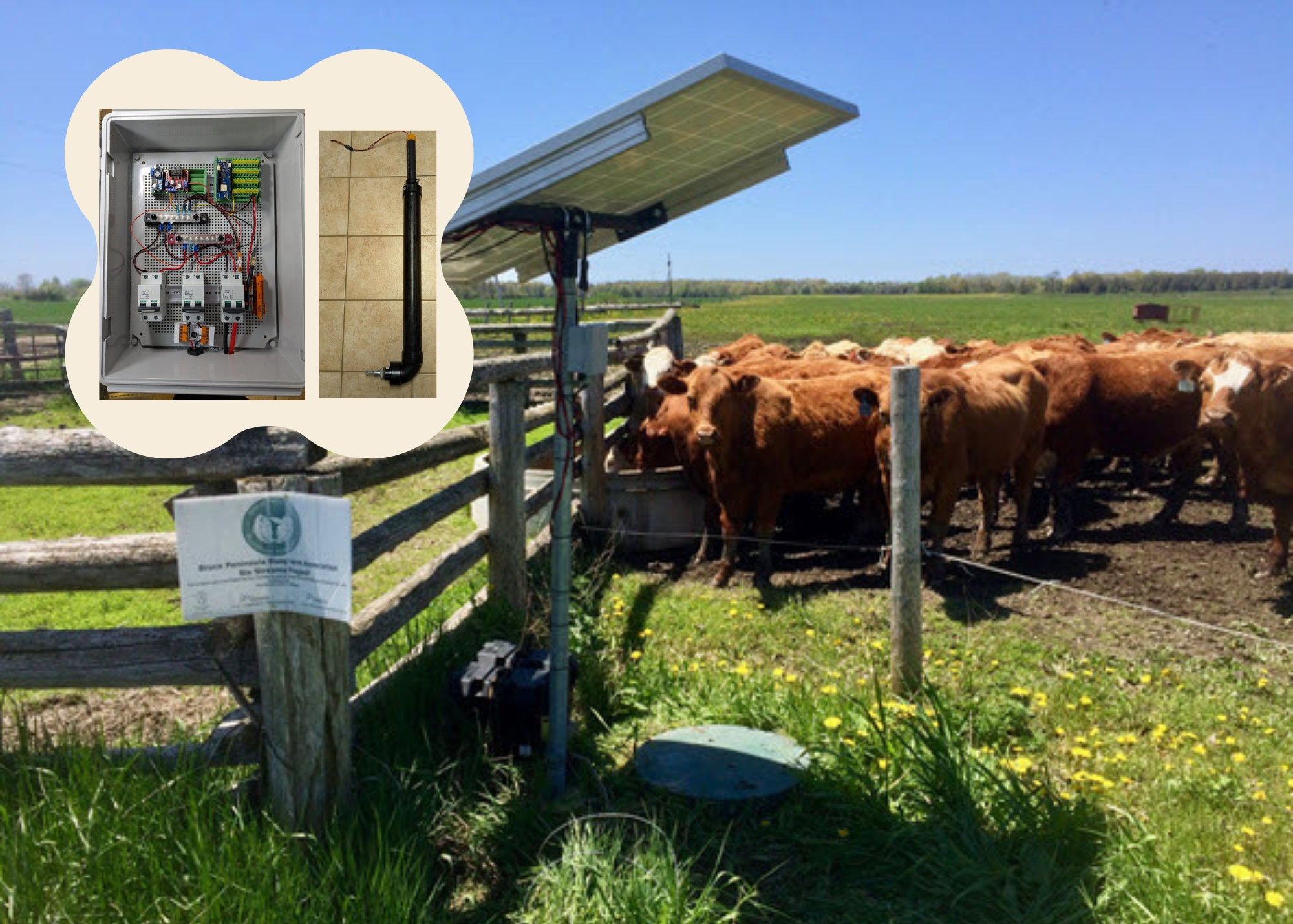
The grant supported the design and production of an IoT prototype watering system. Key features of the new system include a modern float mechanism, multiple pump options, water redistribution capabilities, and real-time connectivity to BPBA’s IoT network. A digital twin approach was used to test both software and hardware, allowing designers to simulate usage, identify potential issues, and refine the system before field deployment. Volunteers created test batteries for each component, evaluating power, pumping, and software performance through iterative cycles of testing and redesign. The alpha prototype successfully connects to the existing countryside IoT network, enabling farmers to monitor water levels remotely, detect malfunctions, and reduce maintenance burdens. Farmers have expressed interest in trialing the prototype during spring deployment, while BPBA continues to work with the Barrow Bay Property Owners Association to optimize the design for diverse site conditions.
Collaboration between farmers and property owners was a cornerstone of the project. Engaging both groups in planning and testing encouraged shared ownership of watershed stewardship. Farmers gained reliable alternatives to stream access for livestock, while downstream residents benefited from cleaner water and reduced nutrient loading. This engagement strengthened relationships across the watershed, building trust and understanding between groups with sometimes competing interests. BPBA also maintained informal engagement with local stakeholders throughout the project, sharing updates, gathering feedback, and incorporating suggestions into design iterations. These conversations reinforced the project’s community-driven approach, ensuring that solutions addressed real-world needs and could be maintained effectively by end-users.
The upgraded watering systems will directly benefit approximately 20 farm families and around 200 members of the Barrow Bay community by reducing cattle access to streams, lowering nutrient loading and turbidity, and improving water quality in Little Lake. By providing reliable, maintainable water sources, the project supports healthy livestock management while protecting sensitive aquatic ecosystems.
Community members praised the initiative for its dual impact on farming practices and watershed health.
Blaine remarked: “It’s a wonderful thing to keep the water clean. I used alternate watering systems for 4–5 years. The cattle liked the water source more than going into the stream.”
Craig added: “The Six Streams Water Quality Improvement Initiative was an instant success when it rolled out. The weakest link had always been maintenance of the in-field solar watering systems.”
Looking ahead, BPBA plans to deploy five field prototypes, optimizing each system based on real-world performance and user feedback. The project serves as a model for integrating technology, environmental stewardship, and community collaboration to protect and enhance watershed ecosystems. It demonstrates how innovative solutions can address agricultural needs while safeguarding water quality for both rural and residential stakeholders.
By supporting Clean Water in a Connected Countryside, Community Foundation Grey Bruce strengthened BPBA’s capacity for environmental innovation, fostered collaboration between farmers and property owners, and improved water quality across the Bruce Peninsula watershed. This project illustrates the lasting impact of technology-driven, community-led solutions for sustainable environmental management.
You can find the Clean Water in a Connected Countryside feauture in the 2026 Vital Signs report on page 33. Visit here to download Vital Signs.